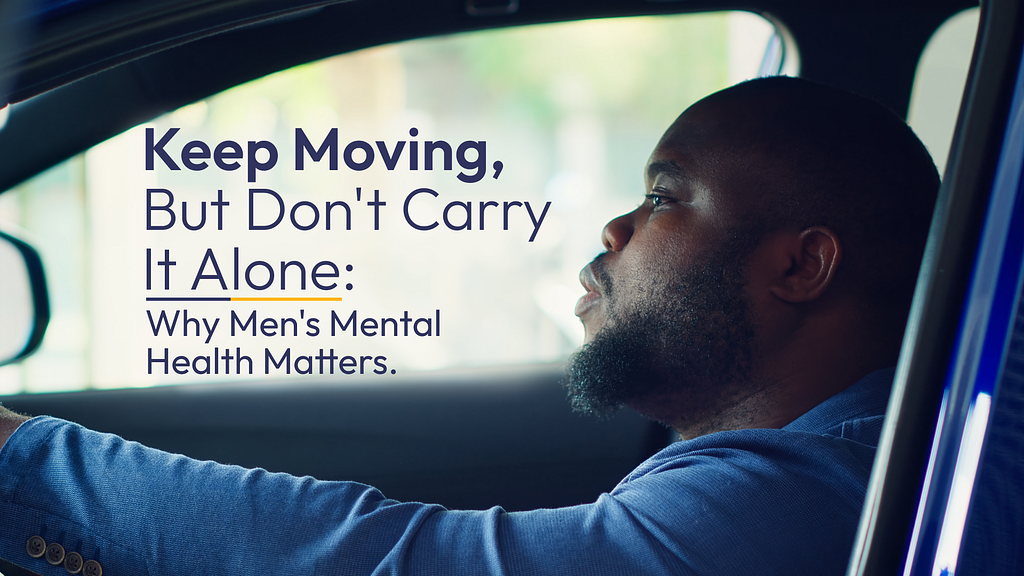
Keep Moving, But Don’t Carry It Alone: Why Men’s Mental Health Matters
Every day, millions of men wake up with a long list of responsibilities waiting for them. They are fathers, husbands, brothers, sons, business owners, employees, drivers, and providers.
They are expected not only to show up, but solve problems, pay bills, support their families, and keep moving forward regardless of what they may be going through personally.
Yet behind the brave smiles, the morning commutes, and the daily hustle, many men are carrying pressures that often go unseen.
As we mark Men’s Mental Health Month, it is important to recognize that mental wellbeing is not only about managing emotions. It is also about managing the everyday pressures that affect how we think, work, and live.
Financial obligations remain one of the biggest sources of stress for many men. School fees, rent, mortgages, business expenses, family commitments, and unexpected emergencies can create immense pressure.
For those who rely on their vehicles for work, whether as business owners, sales professionals, transport operators, or entrepreneurs, even a minor disruption can affect income and add to that stress.
Often, men feel they must handle these challenges alone. Unfortunately, this mindset can lead to burnout, anxiety, isolation, and emotional exhaustion.The reality is that asking for support is not a sign of weakness. It is a sign of strength and self-awareness.
Mental health conversations often focus on emotional support, which is important. However, practical support matters too.
Having access to financial solutions, planning ahead, managing debt responsibly, and seeking guidance when challenges arise can help reduce uncertainty and improve peace of mind.
Financial well-being and mental well-being are closely connected. When financial pressures become overwhelming, stress levels rise. When people have access to the tools and resources they need to navigate life’s challenges, they are often better positioned to focus on what matters most.
We regularly service our cars to keep them running smoothly. We monitor tyre pressure, fuel levels, engine performance, and maintenance schedules because we understand that prevention is better than repair.
The same principle applies to our own well-being. When was the last time you checked in on yourself? When was the last time you asked a friend, colleague, brother, or father how they were really doing? Sometimes a simple conversation can make a meaningful difference.
For many men, the easiest conversations don’t happen in formal settings. They happen during a road trip, while waiting at the car wash, or while chatting at the mechanic’s workshop. These everyday moments can become opportunities to check in, laugh, share frustrations, and remind each other that no one is expected to carry every burden alone.
Sometimes support looks less like a serious conversation and more like spending time with people who know you well enough to ask, “How are things really going?”
At Autochek, we believe mobility creates opportunities. It helps people get to work, grow businesses, support their families, and pursue their goals.
But as we celebrate progress and ambition, we also recognize the importance of well-being. We understand that financial well-being and mental well-being are often closely connected, and that having access to the right support, resources, and financial solutions can help ease some of life’s pressures and provide greater peace of mind.
Whether it’s financing a vehicle that creates new opportunities or accessing support during unexpected financial challenges, having options can make a meaningful difference when the road ahead feels uncertain.
This Men’s Mental Health Month, we encourage men everywhere to prioritize their mental health, seek support when needed, and remember that strength is not measured by how much you carry alone.
Success is not just about reaching your destination. It is also about ensuring that you are healthy, supported, and able to enjoy the journey.
Because while life may keep moving, no one should have to carry every burden alone.
Jun 8, 2026